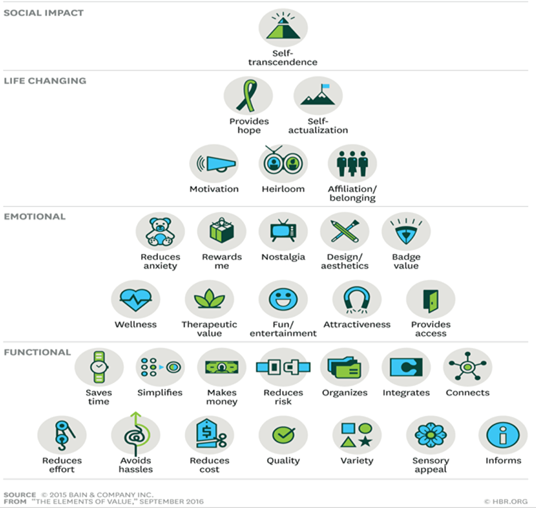
Drivers are what we hold dear at heart. They steer our behaviour, often without us even noticing. From drivers, needs emerge.
The difference is simple.
Needs are concrete and visible.
Drivers are more abstract and universal.
A need tells you what you want.
A driver tells you why you want it.
Your phone is getting slower. The battery drains faster. It still works, but honestly, you are done with it. Time for a new one. Preferably now.
But why, really?
Your old phone still works, after all.
What is happening here goes beyond a practical need. Beneath the surface lies something else. The driver: connection. Your phone connects you to people, work and the world around you. The thought of that connection slipping away feels unsettling. And that sets something in motion.
A second driver comes into play: anxiety reduction.
Buying a new phone brings peace of mind. It prevents you from suddenly going offline. That sense of calm steers your behaviour.
Simple as that. And deeply human.
To understand drivers, we often use the driver pyramid developed by Bain & Company. It helps bring structure to what moves people.
At the base sit the functional drivers. These apply to almost everyone — think convenience or saving time. Above that lie the emotional drivers. These run deeper and vary more from person to person. Anxiety reduction belongs here, for example.
One level higher, we find drivers that enrich our lives, such as connection and a sense of belonging. At the very top sits social impact — the desire to mean something to others or to society as a whole.
The higher up the pyramid, the more personal and powerful the driver tends to be.

For organisations, it is crucial to understand which drivers are at play among customers, employees or residents. They form the foundation for products, services, choices and communication.
The challenge is this: people are rarely aware of their own drivers. Ask about them directly, and you will often get rational answers — while the real story lies beneath the surface.
That is why driver research works differently. Using techniques that help bring the unconscious to light.
Because when you know what drives people, you understand their choices and behaviour. And only then can you truly connect with what they need.
That is listening beyond the numbers.